The letter waits
at the bottom of the book.
A book on top, a letter underneath.
Found when the last page is done.
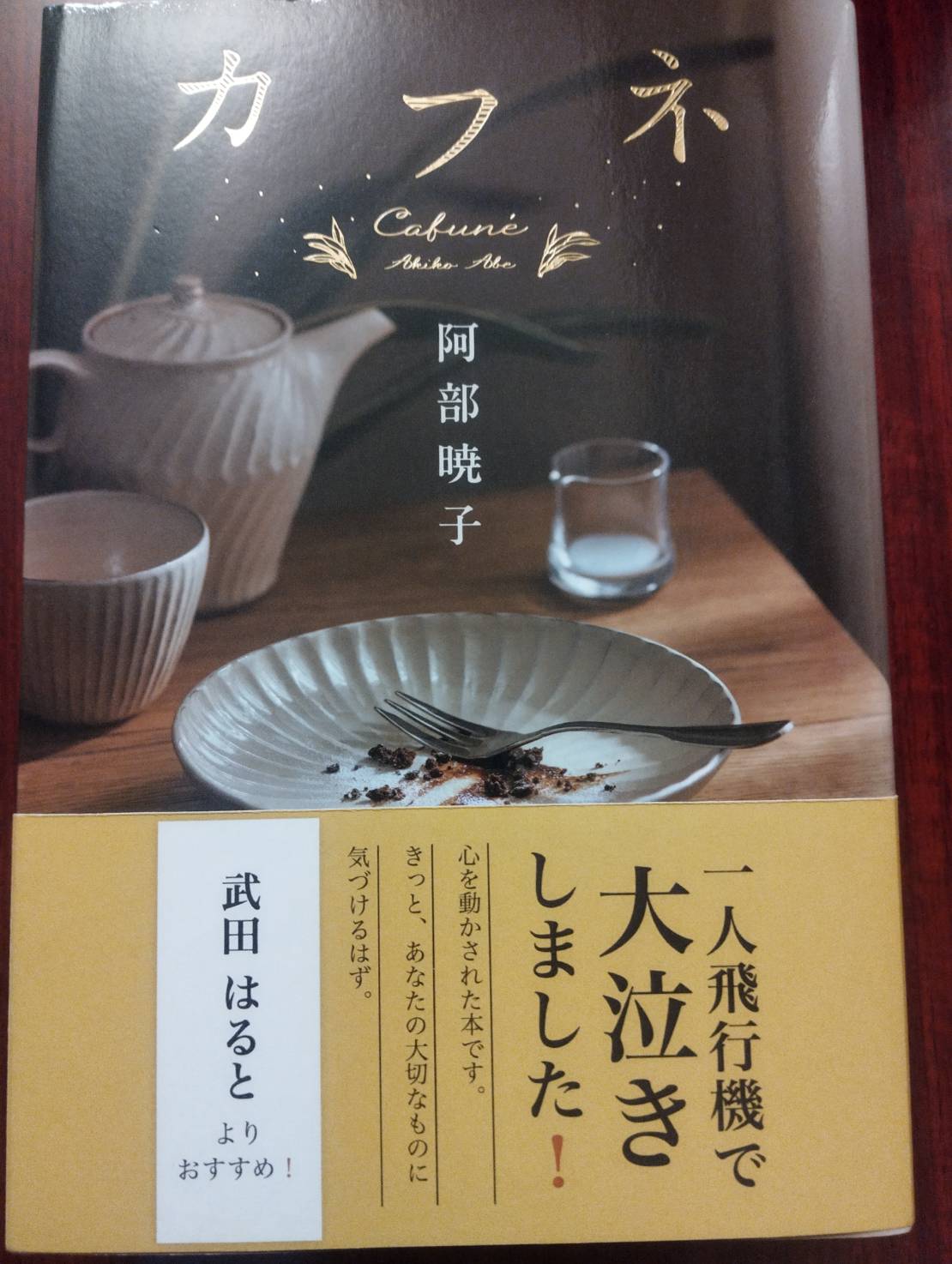
When I was in elementary school, my mother gave me a letter.
She was sitting right next to me.
Something she could have said in three seconds, she wrote on paper, sealed, and hid for the whole two hours of a magic show. In terms of efficiency, it was the worst possible way.
But I don't remember a single thing she said out loud that day. What I remember is the letter.
Words arrive
together with the time they took.
Words are too fast now. Send one and it lands in a second, gets read, gets a reply. Convenient.
But fast words have nowhere to hide. “Thank you” and “I'm sorry” wash away the moment they are said. So the closer someone is, the harder it gets to say anything out loud.
It isn't that we can't say it.
There is no “after” to say it in.
Hide the letter inside the book.
So we decided to hide the letter under the book, so that the hand that finishes reading reaches for the box once more.
{{ h.d }}
They receive the book, read the obi, read the book. They close the last page, go to put it back, and the bottom lifts. There is the letter.
An afterword after the afterword: your own, arriving last.
The obi
The paper band you see on books in Japanese bookstores, in your words. We set it to the exact size of your book, print it one at a time, and wrap it. One sheet runs across the front, the spine, and the back.

In their hands until the last page.
Flowers wilt in days. Sweets are gone the same evening. A book stays in their hands for hours, until the last page. No other gift keeps working this long.
And when they finish, their heart is at its softest. There is no better place for a letter. The lower layer is left empty for exactly that moment.
The book doesn't carry the letter. The book makes the time for it.
Time it takes, and what it costs.
What if they
never finish the book?
That is fine too. The letter waits at the bottom of the box. A year from now, or ten.
Longer than the book. More patient than you.
For moments like these.
Four steps.
The letter,
in your own hand.
Letter paper and an envelope come inside the box. When it arrives, write your letter and place it in the lower layer.
We never see it, never write it for you, never print it. Down to the shape of your handwriting, it reaches one person only. Save the shortest line for the obi.
If there is even one thing
you can't say out loud.
Give that person a book.
A book and a letter,
given in a two-layer box.
Cafuné wraps the book you choose in an obi, adds paper and an envelope for your letter, and delivers it all in a two-layer box. It is run by one person.
About the box
The box has two layers. The book, wrapped in its obi, sits on top. The lower layer arrives empty. That is where your letter goes.
The recipient is not told about the lower layer. When they open the box they see only a book. When they finish and go to put it back, they find the letter.
Give a book alone and the gift ends with the last page. With a lower layer, it starts again from there. That structure is the product.
About the obi
We make the paper band you see on books in Japanese bookstores, in your words. Set to your book's exact size, printed one at a time, wrapped by hand.
The long version goes in the letter. The obi gets your shortest line.
About the letter
Letter paper and an envelope are packed in the box. We never handle the letter itself. No ghostwriting, no printing.
The last thing the reader touches is not printed type but your handwriting. No third party ever sees what you wrote.
About the book
We buy each book to order. Search and dimensions use Google Books data.
The book is charged at cover price, nothing added. If a title is out of stock or out of print, we contact you and you choose another book or a full refund.
Some things only arrive when you reach the bottom.
Three steps to the gift.
Choose the book, and we print your words on the obi.
Where should it go?
Is this the one?
{{ doneTitle }}
{{ doneNote }}